When we hear the word “music”, many first imagine something created for listening and appreciation. Yet the relationship between sound and humans extends far beyond that. Sounds that carry words, sounds that signal danger, sounds used for education or for coordinating a group—
throughout history, humans have used sound for countless purposes.
I am deeply drawn to this primordial nature of sound, and for many years I have felt the desire to create ritualistic sound with my own hands.
This concert, titled “Wounds and Healing” does not begin like a conventional performance. The work has already started the moment the venue opens. From the instant the audience steps into the space, they find themselves inside the world of “Wounds and Healing.” Gradually, as the performers join the space, the ritual of sound begins to rise and take shape.
(From the program note for the premiere of SPAC-E #7 Portrait Series 3: Makoto Hondo – Encounter with a Saxophone Quartet: Wounds and Healing)
Renga is a cycle conceived for instruments and electronics, and the work performed today is the fifth piece in the series. The instrumental part incorporates selected materials from Renga IV for vibraphone, which was premiered in Tokyo in 2024.
On stage, the performers play using a very limited palette of sounds, including gestures related to water. In contrast, the electronic part constructs a broader sonic world by combining the diverse timbres and resonances derived from the shamisen. Moving back and forth between two spheres—tradition and the contemporary, acoustics and electronics—the piece is composed with an eye toward imagining the future of musical tradition.
(From the program note for the premiere at Tanaka Yumiko Music Laboratory 2025)
* If three percussionists are not available, the instruments assigned to Percussion 3
should be played by oboe player (Ocean Drum) and bassoon player (Spring Drum).
Ensemble
14'
2025
Ensemble
Flux
Commission: Platform
This work is a fully notated composition inspired by the concept of generative improvisation (improvisation générative). Generative improvisation is a form of ensemble playing without a conductor, in which multiple performers attentively listen to one another and shape the music through their own moment-to-moment decisions. It is independent of shared meter or conventional stylistic frameworks, and is supported instead by the performers’ memory, perception, and physical engagement. Its characteristic features include ambiguous pulse, multilayered temporal structures, and overlapping trajectories of musical time.
In Flux, I focused on the subtle fluctuations and emergent relationships that generative improvisation can create, while ensuring that these elements would not simply dissipate without direction. To put it differently, the piece is conceived as a form of “controlled improvisation”—a composition in which performers actively construct relationships through sound, yet within a flow and resonance shaped by the composer’s structural and sonic intentions.
When multiple performers generate phrases simultaneously while listening closely to one another, a single musical current slowly comes into being. Ambiguous beats, intersecting timescales, and layered textures arise naturally. This piece is conceived as a fluid structure that unfolds within such a multilayered temporal space.
* If three percussionists are not available, the instruments assigned to Percussion 3
should be played by oboe player (Ocean Drum) and bassoon player (Spring Drum).
“Root of Waves” explores the fluctuation and transformation of sound.
The “waves” refer not only to acoustic waves and flows of energy but also to the core musical gesture that runs through the piece, while the “root” suggests an inquiry into the origin and essence of these movements. In this work, I focus on the cyclical motion inherent in waves and the subtle variations that emerge within them.
Layers of sound gradually accumulate and interfere with one another, generating their own rhythmic life—an echo of the complexity found in natural waves and in resonances that unfold through space. With the addition of electronic sound, new relationships arise between what is heard and what lingers as resonance, blurring the boundaries of time and space.
(from the program note for the premiere of kasane vol.4 — De Près
Renga is a cycle conceived for instrument and electronics, and the work performed today is the fourth piece in the series. The instrumental part incorporates selected materials from the previous piece, which was premiered in Tokyo in 2023 and later revised for its Shanghai premiere in July of this year.
At the core of the composition lies the relationship between timbre and musical gesture. The interactions observed between the vibraphone and the electronic sounds show a certain degree of correlation: for example, when the timbres are similar, contrasting musical gestures are assigned, while when similar gestures are used, closely related timbres are chosen. As a result, the electronic layer functions as a kind of “shadow” of the vibraphone.
(From the program note for the premiere of SPAC-E #6 Portrait Series 2: Takahiro Uchiyama – Speaking Pulses: Dialogue with Percussion)
Player piano is close-miked.
2 loudspeakers (LR)
Computer running Max & DAW(Sampler)
The player piano communicates with a computer via bidirectional MIDI data.
This work draws inspiration from the verse “Funa sasu oto wa shiruki akegata” (“At daybreak, the sound of rowing is clear”), written by Sōgi in the hundred-verse renga Minase Sangin, composed in 1488 at the Mikagedō in Minase (present-day Mishima District, Osaka Prefecture) by Sōgi, Shōhaku, and Sōchō.
Responding to the preceding verse, “Kawakaze ni hitomura yanagi haru miete” (“In the river breeze, a cluster of willows reveals the spring”), this pictorial line evokes the clear sound of oars cutting through the water at dawn. From this imagery, I envisioned a small boat gently drifting on a lakeshore in the transparent air of early morning, and the composition unfolded from that impression.
Within stillness, delicate layers of sound merge and interact, and the piece progresses through subtle and gradual transformations.
Special conditions for the instruments
-
Electroacoustic
Each performers is close-miked.
6 loudspeakers (FL, FR, ML, MR, RL, RR)
Computer running Max
- Trio version -
Each performer uses an in-ear monitor.
- Quartet version -
A MIDI keyboard with at least 61 keys is required.
This work draws inspiration from the verse “Suenonaru sato wa haruka ni kiri tachite” (“In the distant village beyond the fields, mist rises”), written by Shōhaku in the hundred-verse renga Minase Sangin, composed in 1488 at the Mikagedō in Minase (present-day Mishima District, Osaka Prefecture) by Sōgi, Shōhaku, and Sōchō.
Responding to the preceding line, “Karine no tsuyu no aki no akebono” (“The autumn dawn, dew on a temporary bed”), this pictorial verse, depicting a village shrouded in mist beyond the open fields, evoked for me the delicate and mysterious qualities of the electric guitar. From this impression, the composition gradually took shape.
The work is primarily constructed from three elements: tremolos on natural harmonics, simple sustained tones (sometimes with tremolo), and clearly articulated chords. Throughout the piece, various effects—including looper and flanger—are continuously employed.
This piece was composed with the invaluable collaboration of Luca Marty.
Vn Elec
15'
2023/24
Mixte
連歌III
委嘱:kasane
(説明)
器楽に関する特殊な条件
調弦(G-D-As-Es)
電子音響について
ヴァイオリンにオンマイク
スピーカー2台(LR)
コンピュータ(Max)
Vn Elec
15'
2023/24
Mixte
Renga III
Commission: kasane
(Program Note)
Special conditions for the instruments
Tuning (G-D-As-Es)
Electroacoustic
Violin is close-miked.
2 loudspeakers (LR)
Computer running Max
In works involving multiple performers, countless modes of interaction are possible. One direction I personally aspire to is the formation of a larger organic entity, created through the fusion of every sounding body on stage. Within this totality, individual voices are sometimes absorbed, sometimes brought into sharp relief; these moments may emerge suddenly or unfold gradually over time.
In Seminoha, performed by three musicians together with loudspeakers placed both on stage and around the audience, each element carries its own shade and its own current. Through this polyphony of resonances and presences, an organic sonic body comes into being.
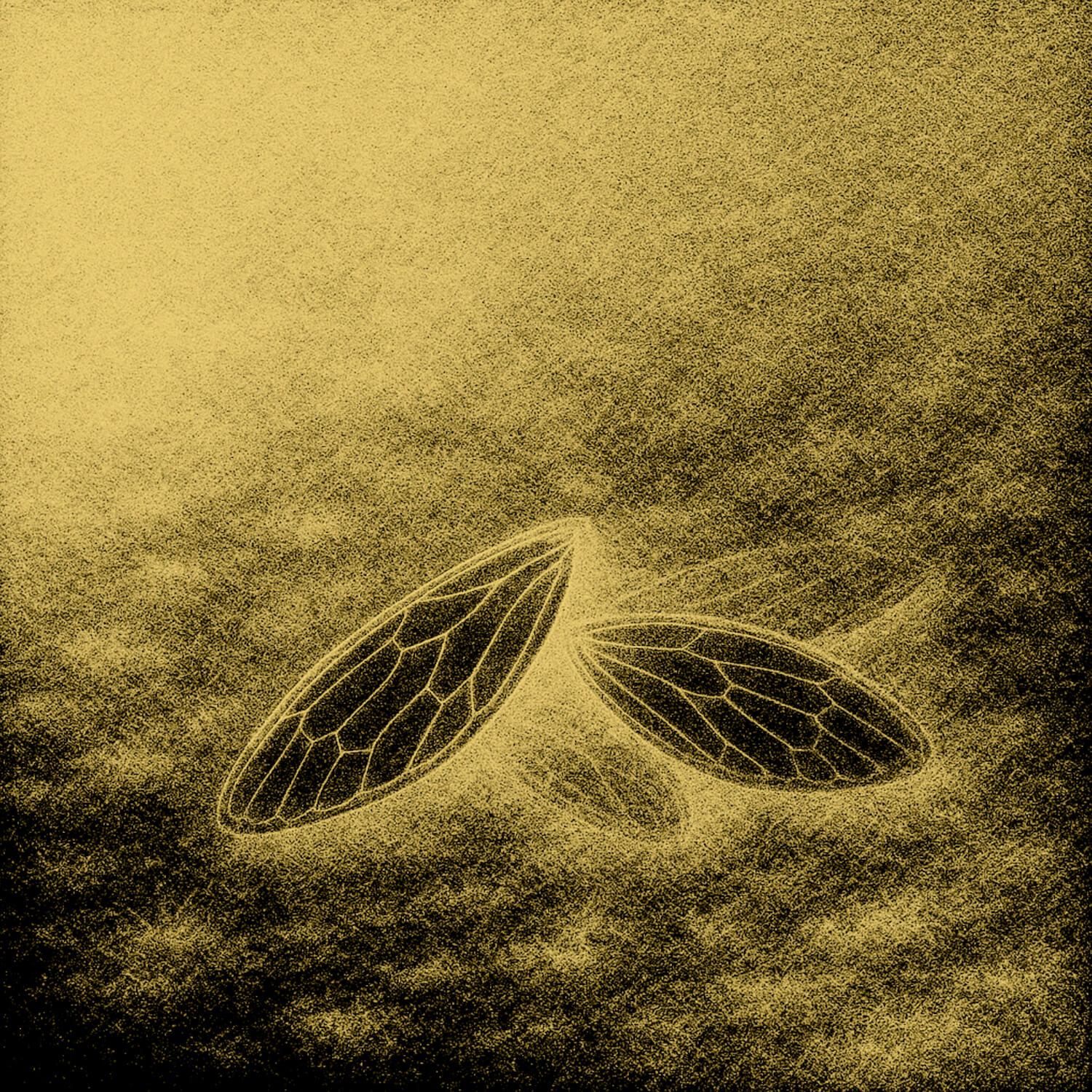
Seminoha (“cicada wing”) refers to one of the traditional Japanese kasane-iro—layered color schemes used in Heian-period garments. As its name suggests, it is a color of summer: a combination of hiwada-iro, reminiscent of cicada wings, and a deep green evoking the colors of trees. Although its exact origin is uncertain, another combination of deep purple and dark green is also documented.
Special conditions for the instruments
-
Electroacoustic
Each performers is close-miked.
6 loudspeakers (FL, FR, ML, MR, RL, RR)
Computer running Max
MIDI Pedal
Commission: spac-e Bass Flute version commission: SPAC-E
This work is based on material from Bach’s Suites for Solo Cello. It consists of seven movements and draws upon the five dances common to all the suites, inserting a transition between the Prelude and Allemande, and an interlude between the Sarabande and Gigue. The piece is performed in three large sections:
[Prelude – Transition – Allemande]
[Courante]
[Sarabande – Interlude – Gigue]
The relationship to the original pieces is as follows:
Suite No. 1 – Prelude:
Uses the original temporal structure as material. The sound is processed through multiple layers of filtering, making the original source perceptually unrecognizable.
Suite No. 2 – Allemande:
Uses the melody as material. It remains perceptible, and the temporal structure is largely preserved.
Suite No. 3 – Courante:
Uses the melody as material. It remains perceptible, while the temporal structure is treated relatively freely.
Suite No. 4 – Sarabande:
Uses the temporal structure as material. Although brief moments of the original may be perceptible, recognition is generally difficult.
Suite No. 5 – Gigue:
Uses the melody as material. It remains perceptible, while the temporal structure is treated relatively freely.